
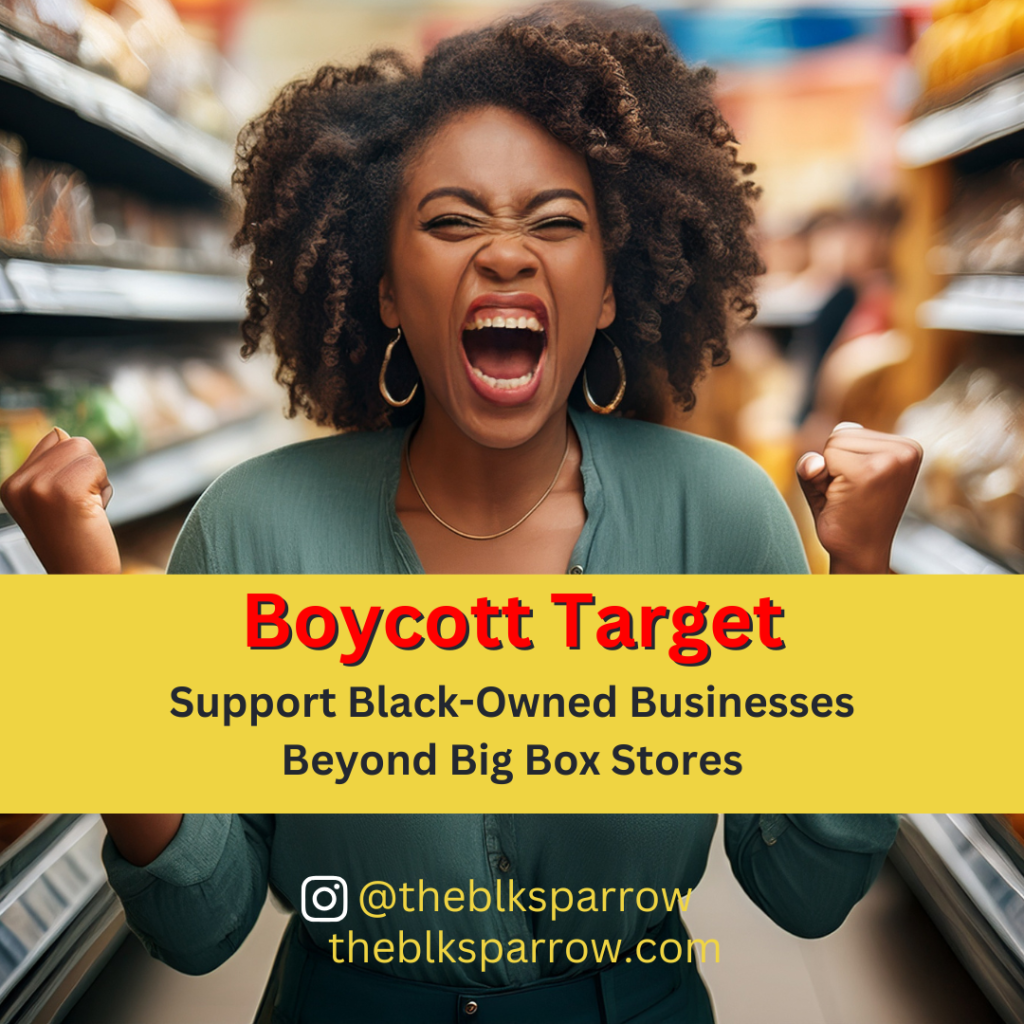
I’ll be real with y’all—the only reason I ever walked into Target was to buy Black-owned products. That’s it. So when I saw reports that some of my favorite brands were no longer being supported by Target, that was an immediate stop for me. ✋🏾
We’ve seen this before: big corporations love to profit off diversity when it’s trendy, but when the pressure hits, they quietly scale back. Target made a whole show of supporting Black-owned brands, only to pull back when it was no longer convenient. If they’re removing us from the shelves, then I’m removing my dollars from their store. Simple.
What Does This Mean for Black-Owned Brands?
Now, let’s talk about the brands caught in the middle. Some Black-owned businesses still have products in Target, and while I don’t support Target’s move, I also don’t want to see those brands suffer because of it. The reality is, when sales drop, those products get pulled permanently.
So what’s the move? We keep supporting Black-owned businesses—just differently.
How to Support Black-Owned Without Target
✅ Shop directly from their websites. This ensures more of your money goes to the brand instead of a major retailer.
✅ Hit up Black-owned marketplaces. Sites like We Buy Black, BLK + GRN, The Nile List, and Official Black Wall Street make it easy to find and buy from Black brands.
✅ Support local Black-owned stores. Many small businesses carry the same products that were once in Target—let’s give them our business instead.
✅ Spread the word. Share posts, leave reviews, and put people on to your favorite Black-owned brands. Visibility matters.
Understanding the Target Boycott: Perspectives and Implications
In April 2021, Target made a bold pledge: to invest over $2 billion in Black-owned businesses by 2025. This initiative was meant to support Black entrepreneurs, increase their visibility, and expand opportunities within one of the largest retail chains in the U.S. For a time, it seemed like a step forward—brands like The Lip Bar, Mented Cosmetics, and Black Girl Sunscreen were prominently featured in Target stores, and the company launched the Forward Founders program to help Black business owners scale their operations.
According to Reuters, many Black-owned brands that once benefited from Target’s DEI programs now fear that their products could be pulled from shelves as a result of the boycott. The retailer’s move to cut back support has left many entrepreneurs concerned about the long-term impact on their visibility and sales, especially as they rely on Target’s platform to reach a larger audience.
The boycott, which is expected to last for 40 days and aligns with the Lent season, has been organized by civil rights activists and consumers who are disappointed by Target’s decision to retract its DEI efforts. ABC7NY reported that the boycott has gained traction on social media, with many urging consumers to stop shopping at Target in protest of the company’s rollback.
However, the boycott also presents a dilemma for Black-owned businesses that still have products in Target stores. These businesses depend on the visibility and revenue provided by the retailer, and they worry that a decrease in sales during the boycott could lead to their products being removed from Target shelves. The Cut highlighted that these brands are urging consumers to support them in ways that don’t inadvertently harm their businesses.
The situation raises important questions about the broader implications of corporate decisions on minority-owned businesses. While the boycott aims to hold Target accountable for its changes in policy, it also underscores the vulnerability of smaller Black-owned brands that rely on major retailers for exposure. According to Business Insider, other corporations, such as Salesforce, Amazon, and Meta, have also faced similar scrutiny for scaling back their DEI programs, further intensifying the conversation about the sustainability of such initiatives.
Ultimately, the Target boycott highlights the complexities of consumer activism. While boycotts can be an effective way to hold corporations accountable, it’s crucial to consider the unintended consequences for the businesses that these actions aim to support. For now, Black-owned businesses are navigating these challenges, working to ensure that they continue to thrive regardless of where their products are sold.
Final Thoughts
At the end of the day, we don’t need Target’s approval to support our own. They can remove the brands, but they can’t remove the movement. We been building, creating, and thriving. And that’s not about to stop now. ✊🏾
References:
ABC7NY. “40-Day Target Boycott Starts in Response to Diversity Initiative Rollback.” ABC7NY, 6 Mar. 2025, abc7ny.com/post/40-day-target-boycott-starts-1st-lent-consumer-react-companys-shift-dei-policies/15980400.
Business Insider. “A List of Companies That Have Pulled Back on DEI, Including Salesforce, Amazon, Google, and Meta.” Business Insider, 2024, businessinsider.com/companies-cutting-dei-activist-backlash-harley-davidson-deere-tractor-supply-2024-8.
Reuters. “Black-Owned Brands Urge Consumers Not to Boycott Target.” Reuters, 28 Jan. 2025, reuters.com/business/retail-consumer/black-owned-brands-urge-us-consumers-not-boycott-target-over-end-diversity-2025-01-28.
The Cut. “Should You Boycott Target for Scaling Back Its DEI Initiatives?” The Cut, 2025, thecut.com/article/should-you-boycott-target-for-scaling-back-dei-initiatives.html.



 THE BLK SPARROW
Leave a comment